
PRESS KIT
OUR EXPERTS
-
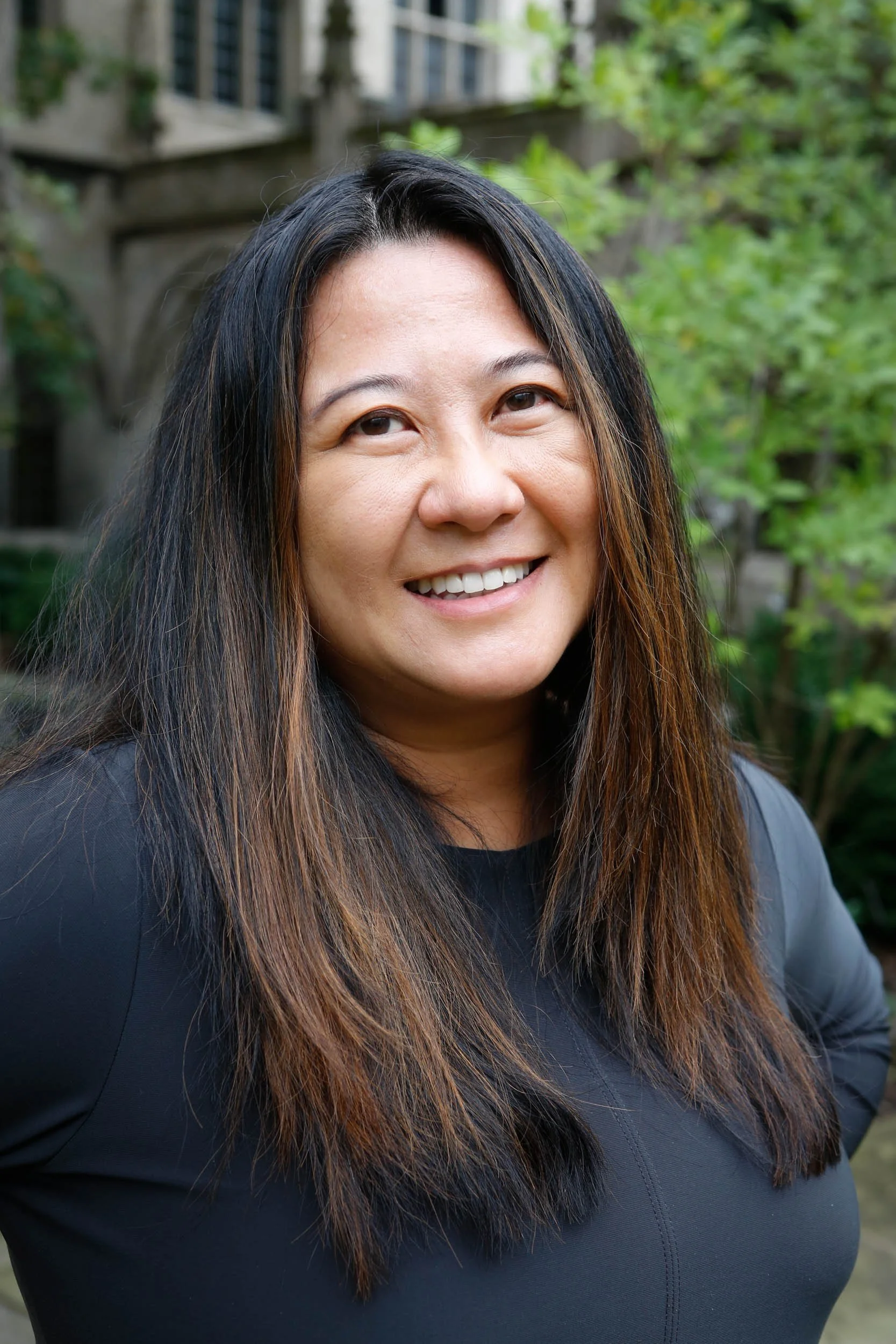
Alice Kim
Director of Practice, CSRPC Beyond Prisons Initiative
Topics she can address: Mass Incarceration, Abolition, Prison Education, Mixed Enrollment Classes
-
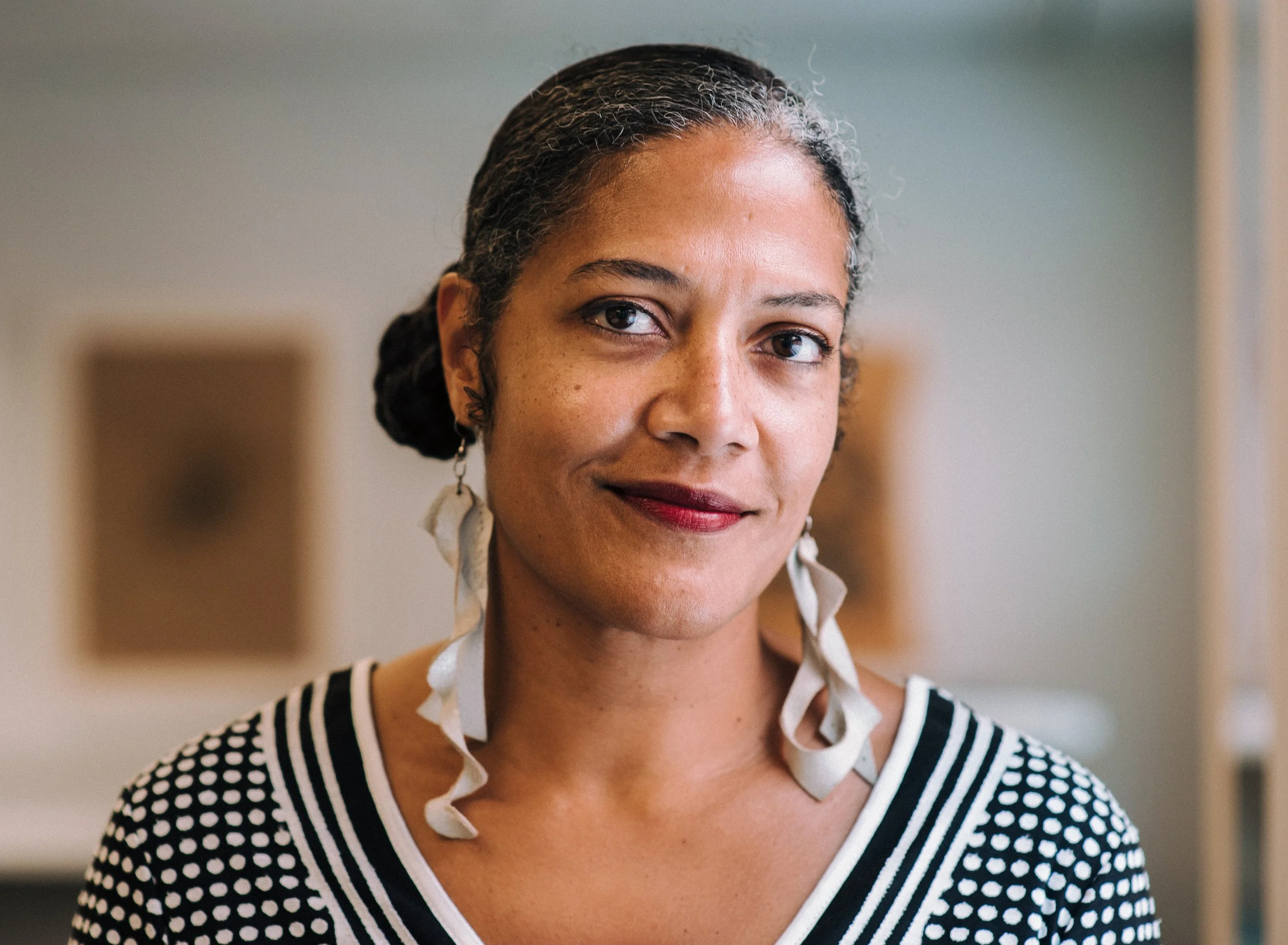
Tracye A. Matthews
CSRPC Executive Director
Topics she can address: Diversity, Black Women’s Activism, Black Panther Party, Film History and Activism
-
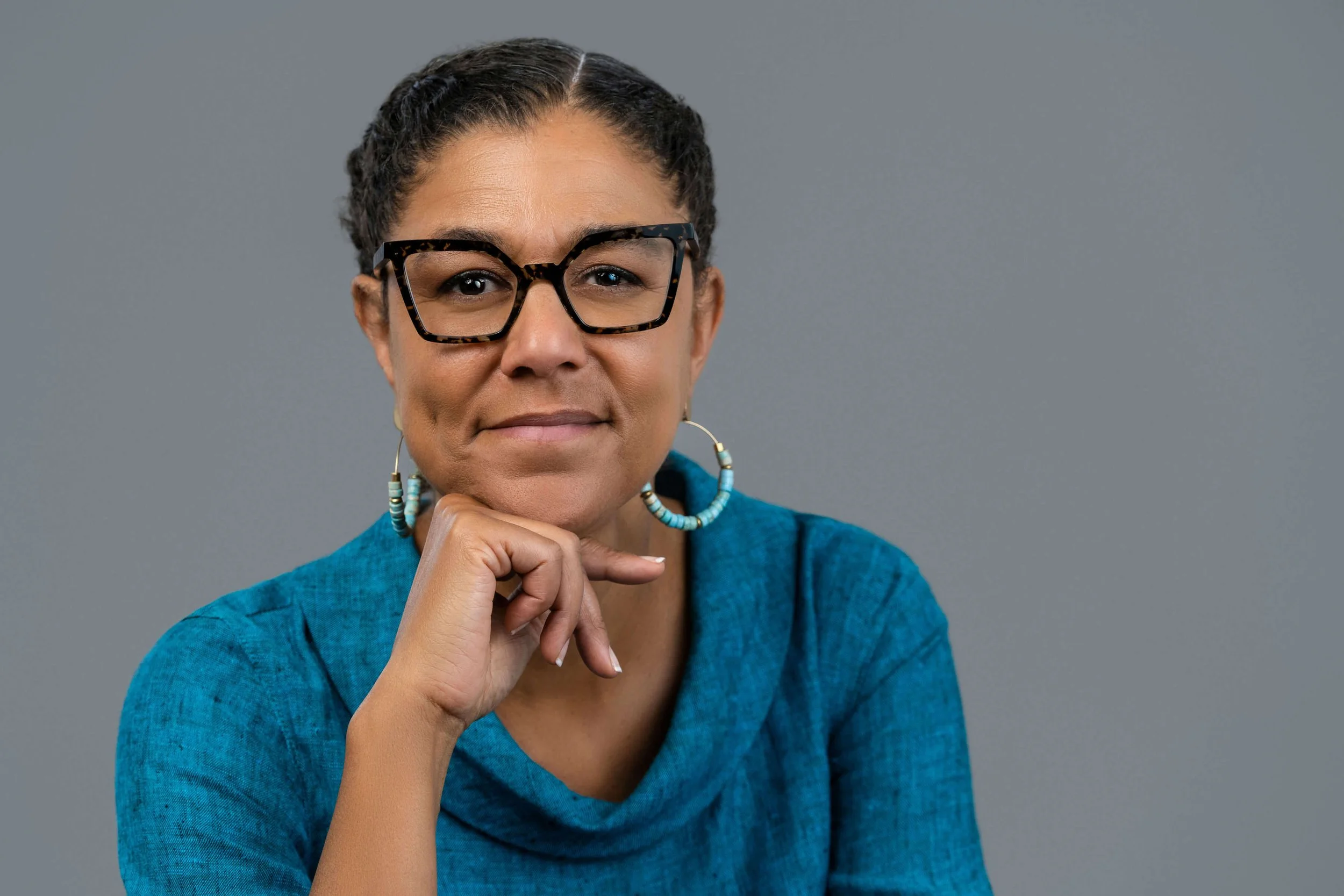
Gina E. Miranda Samuels
CSRPC Faculty Director, Professor of Social Work at the Crown Family School of Social Work, Policy, and Practice
Topics she can address: Transracial Adoption, Homeless Youth, Race and Racism in the American University
For more information about the Center contact Tierra Kilpatrick, kilpatr3@uchicago.edu
PAST PRESS RELEASES
& STATEMENTS
Honoring Tamir Rice
A Tenth Anniversary Day of Remembrance at the Stony Island Arts Bank
FOR IMMEDIATE RELEASE
November 20, 2024
Contact: Anaga Dalal, adalal@uchicago.edu, 201.600.4718 (c)
November 22, 2024, marks ten years since Tamir Rice’s assassination by a Cleveland, Ohio police officer. To honor his life, Tamir’s mother Samaria Rice, the Tamir Rice Foundation, Theaster Gates, Rebuild Foundation, and the University of Chicago’s Center for the Study of Race, Politics & Culture will host a commemorative gathering at the Stony Island Arts Bank. This event recognizes Tamir’s legacy within a sacred space dedicated to reflection, community resilience, and remembrance.
“It’s 10 years later, and I still feel breathless sometimes,” said Samaria Rice. “But through this pain, my vision is to see investment in Tamir’s legacy and community. To continue building on Tamir’s life through gatherings like this weekend’s commemoration at Rebuild and the support of the Tamir Rice Foundation.”
“The epidemic of police brutality has devastated communities of color since the inception of a police force in the U.S.,” says Faculty Director of the Center for the Study of Race, Politics & Culture (CSRPC) Gina Miranda Samuels. “The memory of Tamir Rice calls upon us all to value community and care over cops and carcerality.”
Rebuild Founder and Executive Director Theaster Gates added:
“This commemoration is a reminder of the profound loss of Tamir Rice as well as the enduring strength of Ms. Samaria Rice, who has turned her pain into purpose. As stewards of the Tamir Rice Memorial Gazebo, we are honored to preserve this powerful symbol of his legacy here in Chicago while supporting Ms. Rice’s ongoing fight for justice and her tireless efforts to improve communities for our children.”
The Arts Bank has held a central role as a home to the gazebo where Tamir’s life was taken by a Cleveland Police Officer. Here, the gazebo—first preserved in its deconstructed state and later reassembled—serves as a powerful reminder of both Tamir’s life and legacy as well as the police violence leveraged against Black and brown communities.
On this day, Samaria Rice invites the community to join her in remembrance, with a program that includes reflections, creative expression, a meal, and a screening of For Our Children, Debora Souza Silva’s evocative film on maternal resilience in the face of police violence.
This event, with the creation, local artist musical performances, haikus, and a presentation of stuffed animals and other memorabilia as gifts to Ms. Rice, offers a space for grieving, healing, and celebrating life, honoring Tamir’s spirit and the ongoing fight for justice.
New Arts Incubator show explores Dan Ryan displacement, intersecting identity
Zoe Pharo, staff writer
Nov 15, 2024
For those who grew up on Chicago’s South Side in the late 1950s, the image of a makeshift fence made from mismatched front doors stretching two blocks down State Street may have left a lasting impression.
It certainly did for Candace Hunter, a Chicago installation artist who remembers driving past it once with her father as a child. It wasn’t until years later that someone explained what she had seen—the doors, she learned, “hid the detritus of the homes of the people who were evacuated because of the Dan Ryan.”
Construction on the 16-mile Dan Ryan Expressway continued into the early 1960s. A highly destructive infrastructure project, the Dan Ryan cut directly through South Side neighborhoods to create easier suburban access to the city. It displaced more than 81,000 people, as did other urban renewal efforts on Chicago’s South and West Sides.
Despite making up only 23% of the city’s population at the time, Black residents accounted for 64% of those displaced.
Those were people whose parents or grandparents might have been sharecroppers and worked their fingers to the bone to own property, and then the city and federal government took those properties,” Hunter said.
The doors and stories of those forced out are the subject of a series of works by Hunter featured in “Remembering Ghosts,” a new exhibition at Washington Park’s Arts Incubator, 301 E. Garfield Blvd. Created as part of a 10-month fellowship, a joint program of the U. of C.'s Arts + Public Life and the Center for the Study of Race, Politics and Culture, Hunter’s works join those of artists Ayanah Moor and Johnaé Strong in a haunting show about lost histories, memory and identity.
Some of Hunter’s works try to jog South Siders’ memories. In a corner of the gallery, a fence of doors replicated on fabric hangs on a curtain wall behind a pile of Samsonite suitcases, books, a doll and a bowler hat – a few of the items a family may have taken with them when they were forced to evacuate their home.
On another wall, entire doors and windows dating to the 1930s and 1940s recreate the entryways to the kinds of homes that were bulldozed.
When Hunter began to research the totality of the displacement, she found little information. Looking through archival photographs, she primarily saw images of places like the infamous slums along Federal Street – eliminating blight was part of the rationale given for expressways and other urban renewal projects – rather than documentations of the two- and three-flat homes that were also destroyed.
“People had houses. So where were those neighborhoods?” she questioned. “Urban renewal (said), ‘It was a slum and we had to destroy it.’ That’s not even close to the entire truth.”
So Hunter began “Memory Teas,” events where she invited eight to 10 South Siders her age or older, roughly 70 to 85 years old, to her studio to share their memories of this time together.
“It was important to me that I start doing this right now, because those people who were affected, if they were adults they’re long gone. If they’re teens, they’re older than I am,” Hunter said. “We’re losing that moment, either through age or dementia.”
Some had no memory of the doors or had only heard about the destruction; others were displaced from their homes as children. Hunter also learned of the businesses and neighborhood institutions that were built over. Some places, she said, were raised on stilts and relocated to a new neighborhood, including Rev. Arthur M. Brazier’s the Apostolic Church of God in Woodlawn.
Hunter, who also works in collages, painting, performance art, has said she likes to weave stories together using appropriated materials. A three-panel collage work also on display does just that, exploring the deferred dreams and resilience of those subject to displacement. In one, the skeleton of a Chicago-style back porch constructed from newspaper clippings floats over a blue and black gradient. In another, cutouts of Ebony magazines from the time period form the window pane and brickwork of a building. In the last, rows of red squares invoking Amanda Williams’ “Redefining Redlining” trickle out of formation.
“As a Black person in the history of Blackness in this country, we’ve always had dreams. There are entities and people who would want to shatter them, and so we turn around and make a new dream,” Hunter said. “We would not be here if we allowed people to squash and destroy.”
Hunter has exhibited work in a few local venues this past year, among them the South Shore Nature Sanctuary and the Hyde Park Art Center (HPAC). An avid Octavia Butler reader, Hunter’s immersive solo show at HPAC paid homage to Butler’s Xenogenesis trilogy and The Parable of the Sower.
Alenson Pan-Africanism, Blackness and Queerness
Elsewhere in the Arts Incubator, Johnaé Strong, a video artist in the exhibition, approaches memory from a different lens. A writer, filmmaker, and organizer, Strong delves in materiality and time in her work, intertwining film and digital mediums.
Three screens display excerpts from her film “Black Things Today: Proof of Concept,” a project that documents the work of alumni of the Betty Shabazz International Charter School (BSICS) “Village” to carry on the legacy of their Pan-African upbringing in Chicago.
“The idea for this came from my childhood growing up in East Cleveland, later moving around the Midwest and changing schools. It comes from being a child who celebrated Kwanzaa and learned about Pan Africanism and the Black Power Movement from a young age,” Strong writes in an artist statement. “I’m exploring themes of community, intergenerational love and healing, and the beauty of Black girls.”
In front of the three screens sit mementos and other small objects – a funeral program, the Pan-African flag, and a booklet on her own family’s history.
In another room, visual artist Ayanah Moor displays a series of color-blocked and collaged paintings in the studio in which she worked during the residency. Her approach to painting, she said in her artist statement, centers on the poetics of Blackness and queerness.
“Through social abstraction, I explore multiple interpretations of these concepts, questioning how Blackness is rendered and how its boundaries shift,” Moor writes in her artist statement. “My visual field includes representations of Black women and femmes to convey same-gender love, desire, and joy.”
Moor, who has exhibited in permanent collections worldwide and participated in group shows at places such as the Museum of Contemporary Art in Chicago and the Studio Museum in Harlem, wrote that her work often focuses on the formal elements of painting and integrating print material, creating a tension between the two.
“This visual approach may appear fluid and evolving, rather than fixed and concrete – a queerness of possibility,” she said.
“Remembering Ghosts” is open at the Arts Incubator, 301 E. Garfield Blvd., through December 14.
Panel to Explore Impact of November Election on Incarcerated Population
Featuring Chicago-based formerly incarcerated activists
FOR IMMEDIATE RELEASE
October 25, 2024
Contact: Anaga Dalal, adalal@uchicago.edu, 201.600.4718 (c)
Chicago, IL. On Tuesday, October 29 from 6:00 to 9:00 p.m., the Beyond Prisons Initiative of the Center for the Study of Race, Politics & Culture (CSRPC) at the University of Chicago will convene a panel to discuss the implications of the 2024 U.S. presidential election on the movement to abolish prisons, and on incarcerated persons.
CSRPC Beyond Prisons Justice Practitioner Fellow James “Jimmy” Soto will be among the panelists. Soto, who was wrongfully incarcerated for 42 years, recently announced a lawsuit against the Chicago Police Department and Cook County.
"They take so much from you when you're incarcerated - your personhood - and that's reflected when they take away your right to vote,” says Soto. “To them, you’re less than a citizen.”
Other panelists include:
Bella BAHHS, an arts activist
Alex Boutros of Chicago Votes
Renaldo Hudson of the Illinois Prison Project
Collette Payne of the Women’s Justice Institute
"What I hope our next president will focus on is meaningful reentry for people released from prison, rather than assigning them parole officers to patrol their trauma,” says panelist Renaldo Hudson of the Illinois Prison Project. “How about giving everyone a therapist when they walk out of corrections instead?”
Brandis Friedman, host of WTTW’s Chicago Tonight, will moderate the discussion.
“People who are directly impacted are at the forefront of the movement to abolish prisons,” says Beyond Prisons Director of Practice Alice Kim. “This panel will wrestle with what is missing in the national conversation about the election as more than two million persons languish in U.S. prisons—the highest rate of incarceration in the world.”
The event will take place at the Women’s Justice Institute, 2150 S. Canalport Avenue in Chicago.
Register to attend at bit.ly/BeyondBallot. Doors open at 6:00 p.m. for a reception. The program begins at 6:45 p.m.
UChicago Race Center to Host Annual Public Lecture on Imagining A World Without Prisons
UC Santa Cruz Professor Gina Dent to Speak on Visualizing Abolition
FOR IMMEDIATE RELEASE
May 2, 2024
Contact: Anaga Dalal, adalal@uchicago.edu, 201.600.4718 (c)
Chicago, IL. Next Wednesday, May 8 from 6:00 to 8:00 p.m., the Center for the Study of Race, Politics & Culture (CSRPC) at the University of Chicago will host its signature event, the Annual Public Lecture (at International House, 1414 E. 59th St.).
This year’s lecture will feature Gina Dent, professor of Feminist Studies, History of Consciousness, and Legal Studies, and Associate Dean of DEI at the University of California, Santa Cruz. Dent is also coauthor of Abolition. Feminism. Now. with Angela Y. Davis, Erica R. Meiners, and Beth E. Richie.
Professor Dent’s talk, “Visualizing Abolition: How to Imagine A World Without Prisons,” will address the harms that prisons perpetuate and will invite the audience to consider how, through art, society can reconsider the very need for prisons. Dent will be joined in conversation by Professor Cathy J. Cohen, the inaugural director of the newly formed Department of Race, Diaspora, and Indigeneity and CSRPC faculty affiliate at the University of Chicago.
“The United States has the world’s highest rate of incarceration with some 2.3 million people locked up,” says CSRPC Executive Director Tracye A. Matthews. “In addition, about 11 million persons in the country experience some form of punitive control from detention centers to electronic monitoring, all of which disproportionately impacts communities of color,” Matthews continues. “Our guest lecturer this year will help reframe conversations around justice by addressing the racialized injustice of mass incarceration.”
Professor Dent’s writing and curatorial practice help to amplify CSRPC’s latest initiative, Beyond Prisons, which is a teaching and learning initiative that interrogates, disrupts, and moves us beyond carceral logics and systems.
“Beyond Prisons, in concert with Professor Dent’s lecture, amplify our core mission at CSRPC: To advance scholarship, arts, and public dialogue about the centrality of race and racism in the systems we inhabit,” Matthews says.
Register to attend at bit.ly/ginadent. There will be a reception with local groups that work on abolition and social justice from 6:00 to 7:00 pm, followed by the program.
CSRPC Justice Fellow Jimmy Soto in Conversation with UChicago Professor Reuben MillerOn His Path to Freedom and Advocacy After Serving 42 Years for A Wrongful Conviction
FOR IMMEDIATE RELEASE
April 10, 2024
Contact: Anaga Dalal, adalal@uchicago.edu, 201.600.4718 (c)
Chicago, IL. Next Wednesday, April 17 from 6 to 7:30 p.m., newly appointed CSRPC Beyond Prisons Justice Practitioner Fellow James “Jimmy” Soto will speak at the offices of the Center for the Study of Race, Politics & Culture (CSRPC) on the campus of the University of Chicago (5733 S. University Ave.)
Soto, who served 42 years for a wrongful conviction, will speak with UChicago Associate Professor Reuben Miller, author of Halfway Home: Race, Punishment and the Afterlife of Mass Incarceration.
CSRPC’s Beyond Prisons Initiative is a teaching and learning initiative that interrogates, disrupts, and works to move beyond carceral logics and systems. The Justice Practitioner Fellowship is designed to advance practices, knowledge, and skills for fellowship recipients as well as broaden engagement for Beyond Prisons programming on the UChicago campus and beyond. Jimmy has lived experience on issues of incarceration, reentry, and system-impacted trauma.
“In prison, I lived in a building that should have been condemned,” Soto reflects. “My fellowship with CSRPC provides a platform from which I can speak about the many injustices of the carceral system, highlighting our shared humanity."
“By illuminating the central role that race and racism play in so many systems of oppression such as mass incarceration, we can start moving toward justice, toward a paradigm shift,” says Soto.
“It has been incredible working with Jimmy since he's been home,” says Beyond Prisons Director of Practice Alice Kim. “His brilliance and passion for justice were palpable inside the prison classroom, and now, after forty-two years of wrongful incarceration, he is making the most of his hard-fought for freedom to shine a light on the injustices of the criminal punishment system.”
Jimmy hit the ground running when he walked out of prison just before Christmas 2023. While incarcerated he earned his bachelor’s degree from Northwestern University’s Prison Education Program (NPEP) and was an active member of the Prison + Neighborhood Arts/Education Project’s (P+NAP) Think Tank which explores long-term sentencing practices in Illinois and nationally and is supported, in part, by CSRPC’s Beyond Prisons initiative. Jimmy is a paralegal with Northwestern Law School’s Community Justice and Civil Rights Clinic and a research assistant with the university’s Epistemic Reparations Global Working Group. He is planning to attend law school next year.
“Jimmy’s passionate advocacy and tireless work for justice inside and now outside of prison walls is a powerful representation of our core mission: To advance public dialogue about the centrality of race and racism in the systems we inhabit,” says CSRPC Executive Director Tracye Matthews.
“We are honored to welcome Jimmy onto our campus and to be working with him as our inaugural Beyond Prisons Justice Practitioner Fellow,” adds Kim.
Register to attend at bit.ly/sotomiller.
Doors open at 5:30 p.m. for a reception.
The program begins at 6 p.m.
Chicago Artists Illuminate the Power of Art to Advance Racial Justice
New Cohort of U Chicago Artists-in-Residence Span Genres, Share Vision
FOR IMMEDIATE RELEASE
February 19, 2024
Contact: Anaga Dalal, adalal@uchicago.edu, 201.600.4718 (c)
Chicago, IL. On March 7, the University of Chicago’s Center for the Study of Race, Politics & Culture (CSRPC) and Arts + Public Life (APL) will welcome three new Artists-in-Residence to the university and south side communities.
"For 13 years, CSRPC has partnered with APL to elevate the visibility of underrepresented artists to advance the Center’s core mission—examining the centrality of race and racism in the systems we inhabit," states CSRPC Executive Director Tracye Matthews. "The Artists-in-Residence (AIRs) collaboration stands out as one of our most impactful initiatives, utilizing the power of art for social and racial justice."
The AIRs program has been a cornerstone of APL programming since 2011, supporting over 39 individual artists and helping them launch their careers.
The 2024 Chicago-based artists are Ayanah Moor, Johnaé Strong, and Candace Hunter.
Moor, a visual artist and educator, addresses contemporary popular culture by interrogating identity and vernacular aesthetics. Much of her work centers on hip-hop culture, American politics, Black vernacular, and gender performance. “The poetics of Blackness and queerness are centered in my approach to painting,” says Moor. “Through a process of social abstraction, I explore multiple legibilities. What makes Blackness renderable, and to whom? And how do its edges shift?”
Johnaé Strong is a writer, filmmaker, and organizer from Cleveland, Ohio who is now based in Chicago. She presents audiences with symbols from the Black experience that are quickly decoded by Black folks and asserted for non-Black audiences. Moving through time, black and white, color, movement, and stillness, Strong creates the effect of a freedom dream sequence. Just as enslaved Africans quilted symbols as a map toward liberation, her work is a codex for collective freedom.
“I’m honored to join this cohort of artists and stretch my artistic practice in relation to form and materiality,” says Strong. “With respect to my film and photography work, I am excited to integrate the rich archival history of the south side of Chicago into my contemporary musings and observation of Black girlhood.”
Candace Hunter’s work includes collage, painting, the written word, and performance. Her art speaks to the wonder and joy of the little brown girl within her and all little girls with whom she meets.
“Doors are at both an entranceway and exit,” says Hunter. “They are magical to me, never quite knowing what is beyond the threshold. I am looking forward to the creation of works that pay homage to the hopes and dreams of the citizens of Chicago who, for a time, dreamed at the intersection of two Black neighborhoods, at the intersection of hope and renewal.”
The artists will be formally welcomed to campus at a reception on Thursday, March 7 from 7:30 to 9 p.m. at the Greenline Performing Arts Center (329 E. Garfield Boulevard).
Register to attend: bit.ly/2024AIRS
October 27 Conference to Examine the Role of Race on College Campuses
University of Chicago Race Center Convenes University Partners for Cross Cutting Conversations
FOR IMMEDIATE RELEASE
October 18, 2023
Contact: Anaga Dalal, adalal@uchicago.edu, 201.600.4718 (c)
Chicago, IL. The Center for the Study of Race, Politics, and Culture (CSRPC) at the University of Chicago will convene leading thinkers, students, and activists from the University of Chicago community—and beyond—to discuss the role that race plays on college campuses.
The conference, entitled “Reimagining the University: Race and Freedoms” will feature public panels and performances on October 27th from 9 a.m. to 4:30 p.m. at the University of Chicago campus in Hyde Park.
“We are in dire need of a paradigm shift within and beyond the modern university,” says Gina Miranda Samuels, professor at the University of Chicago Crown Family School of Social Work, Policy, and Practice, and CSRPC faculty director.
“The CSRPC convening attempts to reimagine that socially just paradigm and expose how white supremacy culture fuels practices that routinely undermine our collective experiences of freedom, power, and agency.”
The conference will also serve as a gathering of the Mellon-funded Centering Race Consortium, which includes CSRPC university partners from Brown, Stanford, and Yale.
Professor Samuels will deliver opening remarks at 9:30 a.m.
Other panelists include:
Cathy Cohen, David and Mary Winton Green Distinguished Service Professor at the University of Chicago
Tricia Rose, Chancellor’s Professor of Africana Studies at Brown University
Eugin Park, assistant professor of education at Stanford University
Zelda Roland, director of the Yale Prison Education Initiative
Yanilda Maria Gonzalez, assistant professor of public policy at the Harvard Kennedy School
More than 150 people are expected to attend the day of panel discussions and performances.